Tuesday, August 2, 2011

{Summer Camp} Tutorial: Make A Toad House

Hello Design Dazzlers! I'm Stephanie Lynn from Under the Table and Dreaming and I am thrilled to be here today with a fun camp craft to engage the little ones.


I love crafting projects and when I can get my little guy involved it is even better. He is pretty fascinated with all the creatures that pop out in the summer, especially the toads; so with a few supplies we had on hand, we put together a cozy home for our little friends.


Materials Needed:

Recycled Plastic Container - preferably a tall one

{we used an old bulk Twizzlers container}

A Large Bowl

Craft or Wood Glue

Dirt or Potting Soil

Spray Paint or Acrylic Paints

Clear Spray - Sealant

Scrap Vinyl or Stickers


Tools Needed: Scissors, Foam Brush


Begin by cutting a door into the plastic container - make sure you turn the container upside down so the opening is on the bottom. I used regular scissors and they worked perfectly on the plastic. If there are any sharp edges left behind simply cover them with electrical or masking tape so no one gets scratched - {the little ones or the toads}.


Spray the container with a shade of brown paint. My guy is still quite young so I used spray paint. You could also let the kiddies paint it with acrylics as well. This step is optional, though it makes for a finished looking house in the end.


Working with one side at a time, squirt out a good amount of glue and smooth it out with a foam brush ensuring the entire side is covered.


Sprinkle dirt or potting soil over the glue and shake off any excess.


Once all the sides are covered, let the glue set for a couple of hours and go play!


After it is dry spray a clear coat over the dirt to seal. This will help adhere any loose dirt and protect the house as much as possible from the elements.


While the clear coat is drying, prepare the bowl for the top. Make sure the bowl you are using fits nicely on the top of the container and hangs over the sides - this will aid in protecting the bottom of the container from the elements as well.


Decorate the bowl as you wish. It can be sprayed or if you still have the attention of your little helpers - letting them have free range with a brush and acrylics would work too! {If you do opt to use acrylics make sure you seal them with a clear coat}


Our bowl was already white so I used scrap vinyl to cut out a few circles to place on the surface before I covered it with red spray paint.


I made a little pennant banner for our home - I'll be posting that tutorial on my blog this week. To attach it to the container, I simply poked two holes into the top and fed through the wires to hang.


Place the bowl upside down on top of the container and wait for the toads...of course our toads are camera shy and have been no where to be found for the past couple of days.


Even though I did most of the work on our toad house because my guy is younger, he still had fun helping along and being involved - which is what it is all about.


Hope you are having a wonderful summer ~ Enjoy!


For more creative do-it yourself ideas, visit Stephanie Lynn on her blog,

Under the Table and Dreaming

You can also connect with her on facebook and twitter


Monday, August 1, 2011

COMPROMISE OR CAPITULATION ?


On the verge of an historic vote which will seal our nation's fiscal future in the near term, every poll I've seen indicates that Americans are disgusted by the spectacle of demagoguery, extortion, and capitulation going on in Washington, DC. Both parties are posturing, Republicans are extorting, and Democrats (including the president) are capitulating. There are moderate exceptions on both sides, but for the most part the debate over raising the nation's debt ceiling, riven by ancillary issues including whether to raise or slash spending, and whether to raise or slash revenue .... for the most part that debate has been an exercise in the worst kind of politics, sanctimonious public pronouncements coupled with shady deals in private conferences, resulting in an eleventh-hour deal with all the forethought and quality of a schoolchild's essay composed in the wee hours before the deadline.

It is the first time in our history that the economy has been held hostage by a voting deadline on raising the debt ceiling. And it is Republican dogma which has brought us to the brink of disaster. Recall that President Reagan increased the debt ceiling twice as fast as Obama (see chart below). Recall also that when Republicans were in full possession of the Senate, the House of Representatives, and the White House (under GeorgeW. Bush), they systematically dismantled the economic and fiscal policies which produced the strongest economy and largest budget surplus in our history (an economy and surplus achieved under Bill Clinton). The GOP "cut taxes (with a heavy tilt toward the rich), waged two wars on the national credit card .... passed a prescription drug benefit with no revenue to support it, and deregulated Wall Street (which helped turn the American economy into a casino and touched off the Great Recession."

Barack Obama inherited an economic and military debacle several decades in the making under three Republican presidents. To heal all wounds and repair the ship of state in one term, or even two terms, would take a miracle. He has defended his efforts at compromise as necessary to arrive at any kind of deal acceptable to liberals and conservatives. Others, even in his own party, aren't so sure. Economist Paul Krugman sees the president's act as surrender. He explains that "the deal itself, given the available information, is a disaster, and not just for President Obama and his party. It will damage an already depressed economy; it will probably make America's long-term deficit problem worse, not better; and most important, by demonstrating that raw extortion [by Republican lawmakers] works and carries no political cost, it will take America a long way down the road to banana-republic status."

The particulars of the current proposed deal may be found in this Huffington Post summary, which tends to confirm Krugman's analysis. Democrats have made concession after concession, while Republicans have relented on virtually no issues. Robert Reich spells them out thus ~ "The deal does not raise taxes on America's wealthy and most fortunte -- who are now taking home a larger share of total income and wealth, and whose tax rates are already lower than they have been in eighty years. Yet it puts the nation's most important safety nets and public investments on the chopping block.

"It also hobbles the capacity of the government to respond to the jobs and growth crisis. Added to the cuts already underway by state and local governments, the deal's spending cuts increase the odds of a double-dip recession. And the deal strengthens the political hand of the radical right.

"Yes, the deal is preferable to the unfolding economic catastrophe of a default on the debt of the U.S. government. The outrage and the shame is that it has come to this choice .... The budget deficit is not the biggest obstacle to our prosperity. Lack of jobs and growth is. And the largest threat to our democracy is the emergence of a radical right capable of getting most of the ransom it demands."

So what do you think? Is all this hard bargaining simply democracy at work? Or is it one party giving away the candy store, for fear of being called by the honorable title "liberal"? I'm inclined to agree with Krugman's and Reich's assessments. And I continue to view Republicans as corrupt, and Democrats as inept. The system is broken -- capitalism is morally bankrupt, and democracy has degraded from government by the people, to government by Wall Street.

This isn't the first elemental crisis we've faced, nor will it be the last. One thing is certain. As Edmund Burke famously observed, "All that is necessary for the triumph of evil is for good men [and women] to do nothing." Decry apathy and get involved. Call your Senators and Representatives, sign petitions, demonstrate. Where is the sea of protests and marches of the 1960s and 1970s? Where is the indignation?


My Favorites: From The Link Up Party

Homespun with Love shares how to create a cool t-shirt with a bleach pen. Easy peasy - great idea!


Check out Moore Minutes to learn how to make these glow stick lanterns.


Fruit and yogurt cones created by Come Together Kids - yummy yet healthy snack!


Sweeter Than Sweets makes this adorable art smock.


Fancy Frugal Life shows how-to make Cat in the Hat snacks - perfect for a Dr. Seuss day.


Make a darling bunny completely out of marshmallows tutorial by Stixn Pops!


Thank you everyone who linked up to our party. This is our last week of Summer Camp. We've had some amazing Summer Camp Counselors share awesome posts on Design Dazzle. We will still be featuring our link up party every Friday with a  couple of changes :)


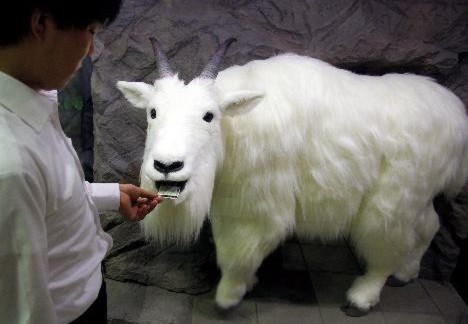
Goat

True Wild Life | Goat | Goats originated from the mountainous areas of west Asia and eastern Europe, grazing on hillsides and plains. Modern day common goats are known as domesticated goats and are thought to be very closely related to a sheep. For thousands of years goats have been used for their meat, hair, milk and skins. In some countries goats are also used to help with carrying heavy loads.

One of the rarer species of goat is the fainting goat from Tennessee in the United States. These goats literally freeze up, the goats legs go rigid and the goat falls over. The goat will soon get back up and continue grazing until it happens again. Most species of male goats naturally have two horns on the top of their head. The horns of the goat are made out of the substance keratin, from which human fingernails are also made. The male goats mainly use their horns to defend themselves from other dominant male goats and from unwanted predators. Some species of goat also have females that have two horns on the tops of their heads.


Goats are typically found in more barren landscapes and many species of goat tend to prefer mountainous and rocky terrains. The goats that inhabit the mountainous cliff faces are amazingly agile and are able to hold their hold well on small ledges and are very adept at jumping and running around on them. The goat is natural prey to many predators which include leopards, tigers, large reptiles and most commonly humans. Today the goat is also found in parts of South America where the goats are farmed and hunted for their meat and skins.

The goat is most closely related to the sheep and there are many similarities between the two species as well as a number of differences which include the tail length of the goat which is noticeably longer than the tail of the sheep.

Goat


True Wild Life | Goat | Goats originated from the mountainous areas of west Asia and eastern Europe, grazing on hillsides and plains. Modern day common goats are known as domesticated goats and are thought to be very closely related to a sheep. For thousands of years goats have been used for their meat, hair, milk and skins. In some countries goats are also used to help with carrying heavy loads.


One of the rarer species of goat is the fainting goat from Tennessee in the United States. These goats literally freeze up, the goats legs go rigid and the goat falls over. The goat will soon get back up and continue grazing until it happens again. Most species of male goats naturally have two horns on the top of their head. The horns of the goat are made out of the substance keratin, from which human fingernails are also made. The male goats mainly use their horns to defend themselves from other dominant male goats and from unwanted predators. Some species of goat also have females that have two horns on the tops of their heads.
Goats are typically found in more barren landscapes and many species of goat tend to prefer mountainous and rocky terrains. The goats that inhabit the mountainous cliff faces are amazingly agile and are able to hold their hold well on small ledges and are very adept at jumping and running around on them. The goat is natural prey to many predators which include leopards, tigers, large reptiles and most commonly humans. Today the goat is also found in parts of South America where the goats are farmed and hunted for their meat and skins.
The goat is most closely related to the sheep and there are many similarities between the two species as well as a number of differences which include the tail length of the goat which is noticeably longer than the tail of the sheep.

LinkWithin